Software Projects for November
This will be a short one, and a cross-post to both my main newsletter and Code Cookbook, so if you want to see more of these through the end of the calendar year, sign up! I won't keep double-posting, so if you're already set you won't see any more on main this year.
wxterm
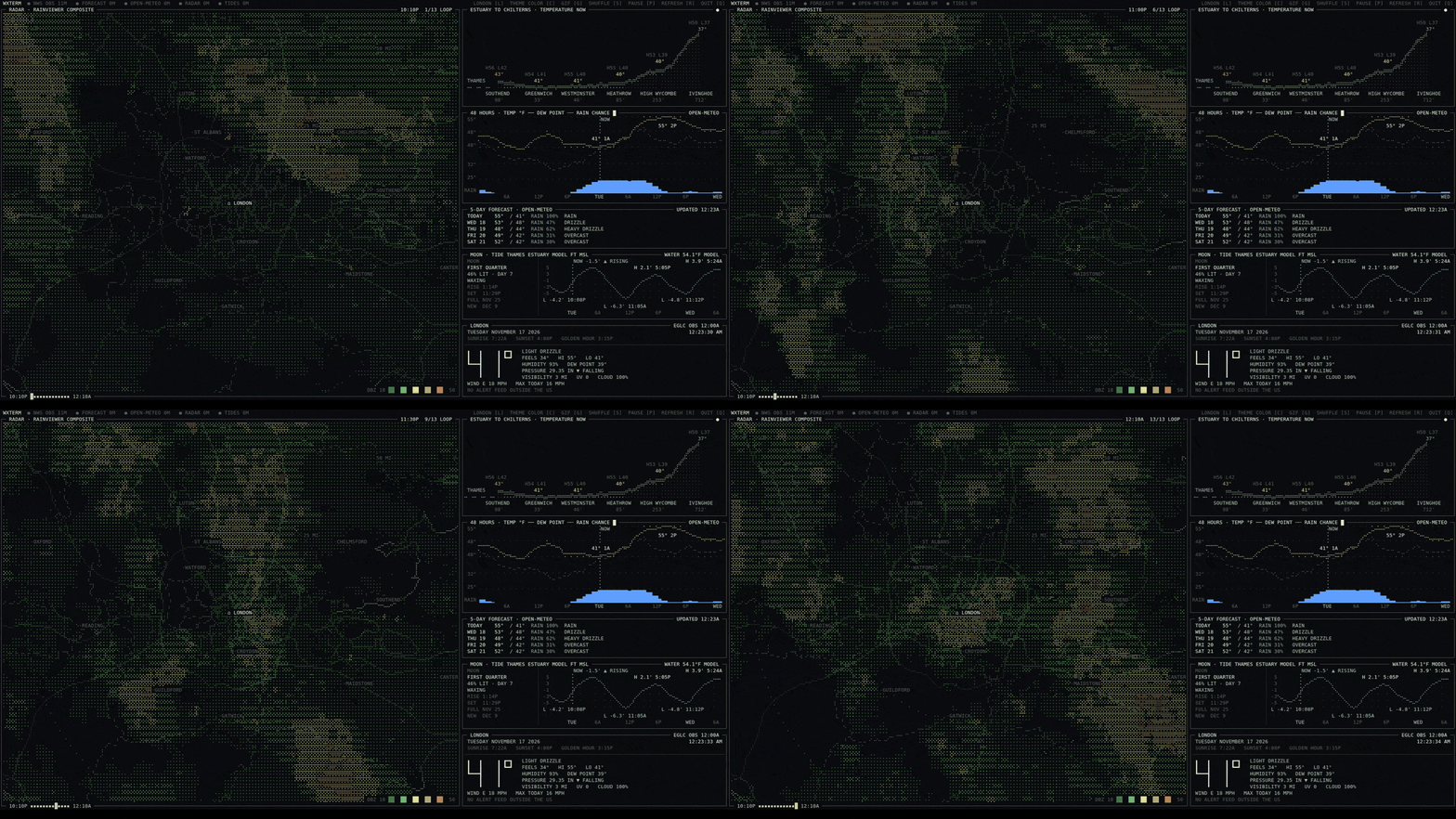
First for you is wxterm, an app I wrote using Hermes and Claude Opus 5.5 that turns a humble Lenovo Thinkpad into a desktop weather station. It does more than the GIFs show though- on the back end it's using Docker to pull down free weather data and share it on the laptop screen. It's set to take over the boot process into a kiosk cage setup, so I don't recommend running as-is on your daily driver laptop. It also mixes the screen elements around to reduce the chance of burn-in, but beware- the screen does not turn off. You can read more about the release on the Github page for it here: wxterm
Kist
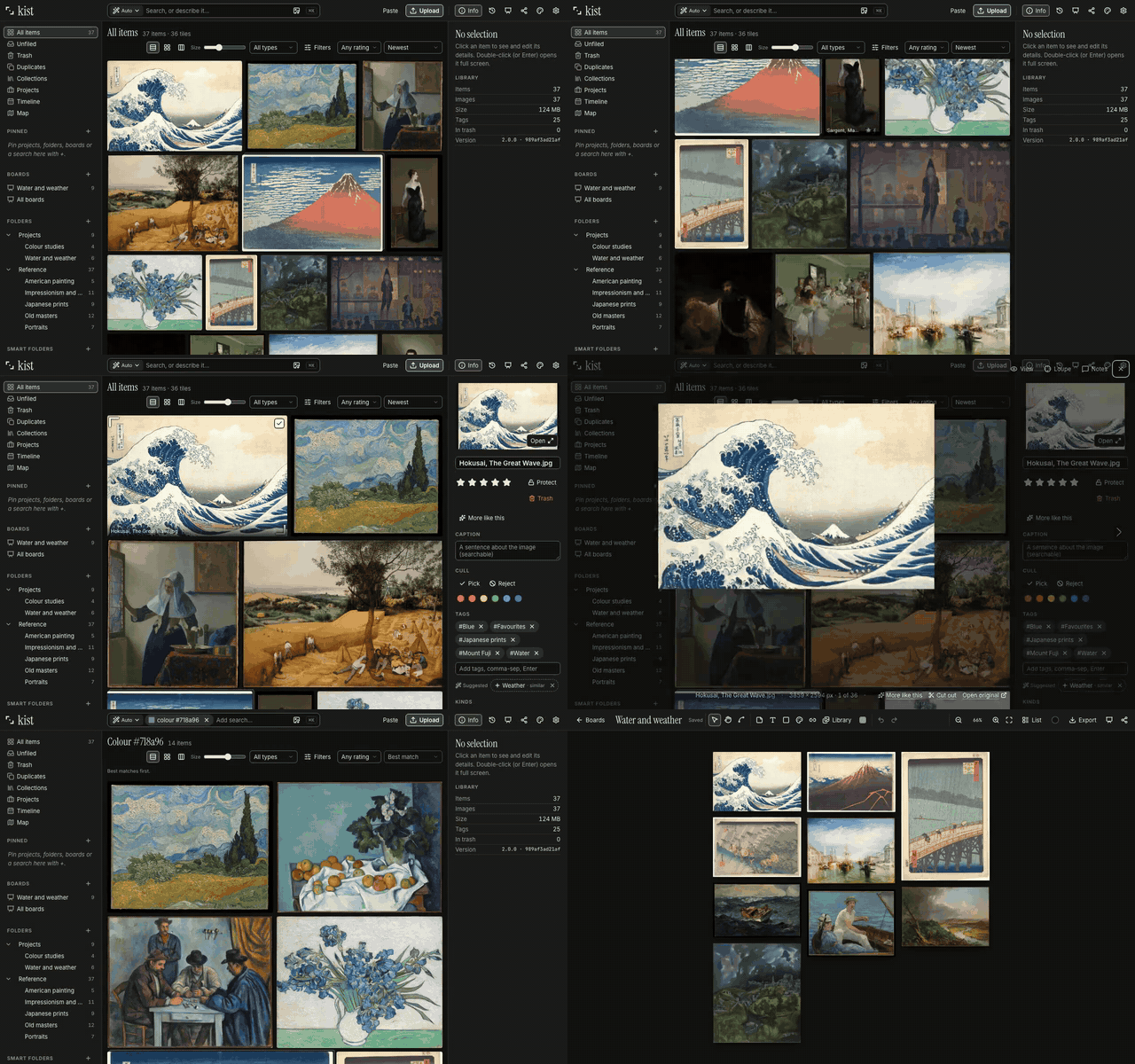
Next up is Kist, which in Scottish means "chest" or "coffin" in Dutch! The idea is simple, it's like Pinterest but without ads, and like Eagle but with a built in MCP. Additionally it runs on a pretty powerful set of Docker containers to do just about everything you'd want with images- just not editing.
This means it runs local on your hardware, and works great on any web browser- so far I have only built the browser plugin for Firefox, but it is signed, and sends out nothing.
This is a great tool for tagging and organizing images and putting them together in collections, and while I've built much of it for visual designers, it's primarily for me. The MCP is extremely powerful and has let me go through 6,700 images by tagging and helping me break them down and clean them up. It also helped me go through an old folder of memes, internet clips and gifs to find just what I wanted and trim it down from over 10,000 images to about 1,000 keepers.
What I'm left with is tagged and organized pictures of cool stuff, tech, sketches and all kinds of cool stuff ready to use for inspiration for the next design. I hope you like it, but it's designed to run on a more powerful Linux machine or NAS with Docker, and even includes local models for processing images. You can learn more about it and check out the release notes on the page here: Kist
Thank You
Thank you all who continue to provide support, and I know the electronics and 3D printing has gotten really expensive. I am going to focus for the winter months on projects that can use the hardware you already have, so signing up for the newsletters to get access to these kinds of posts will continue to be free. Some Code Cookbook items will cover AI a little more in depth as well. Paid subscriptions are always welcome and help considerably- thank you to all who have supported me- it helps a ton.
Comments ()